Bed design and furniture
From Slats to Solid Support: Understanding Platform Bed Frames
A platform bed can look quietly simple: a mattress resting on a low, clean-lined frame. Underneath that uncluttered profile, though, is an important design decision. Slats, a solid deck, the frame’s joints, and its proportions all influence how the mattress is supported, how air moves, and how the bed fits into a room.
Understanding those details makes it easier to evaluate a platform bed as both a piece of furniture and a practical foundation for sleep. The right frame is not simply the one with the most striking silhouette. It is one whose construction suits the mattress, the room, and the way the bed will be used.
What makes a bed a platform bed?
A platform bed is designed to support a mattress directly on its own base, commonly without a separate box spring. That base may consist of a series of wooden or metal slats, a solid panel, or a combination of structural elements. The mattress sits within or above the perimeter of the frame, depending on the design.
The term describes a broad family of bed frames rather than one exact construction. Some platform beds are low to the floor and visually spare; others have substantial headboards, taller legs, or built-in storage. Their shared principle is the direct support surface. Because the mattress rests on the frame’s base, the design and spacing of that base matter.
Traditional bed arrangements often use a foundation between mattress and frame. A platform design simplifies that arrangement, but it does not mean every mattress works on every platform. Mattress makers specify what kinds of support are appropriate, including whether slats are acceptable, how far apart they should be, and whether a solid surface is needed. Checking those requirements is an essential step before choosing a frame.
The support story: slats and solid decks
When comparing platform bed frames, the first visible difference is often the support surface. Slats create a series of supporting rails across the width of the bed. A solid deck provides a nearly continuous platform beneath the mattress. Neither arrangement is automatically superior: each has practical consequences that depend on the materials, construction, and mattress specifications.
Slatted platform beds
Slats are spaced apart to form a supportive framework while leaving openings between them. A well-designed system distributes weight across the mattress and frame, with the spacing and rigidity of the slats tailored to the intended use. Some frames use fixed slats; others use flexible or slightly sprung slats. A center rail and additional support legs may be included, particularly on larger sizes, to help carry weight across the span.
The gaps between slats allow air to circulate beneath the mattress more freely than a fully solid deck typically does. That can be a useful feature in a bedroom, but airflow should not be treated as a cure-all for moisture or ventilation issues. Room humidity, bedding, mattress materials, and cleaning habits all play a part. It is also important to follow the mattress manufacturer’s guidance: gaps that are too wide may leave some mattress types inadequately supported or affect warranty coverage.
Slats should sit securely in their intended positions and should not shift, bow excessively, or create uneven contact. Over time, wear can appear as loosened fasteners, squeaks, movement at the center rail, or visible sagging. Periodic inspection is sensible, especially after moving a bed or tightening its hardware.
Solid-deck platform beds
A solid deck offers a broad, continuous surface. Its appeal is straightforward: the mattress is supported across a larger area, and there are no substantial spaces between individual slats. Some frames use a single panel; others use several panels joined to create a nearly continuous base. The quality of the deck, its thickness, and the structure beneath it determine how effectively it carries weight.
A solid surface may limit airflow beneath a mattress compared with an open slatted base. For some mattress designs, this is acceptable or even specified; for others, the maker may recommend a slatted foundation or a particular type of ventilated support. Read the mattress instructions rather than assuming that a solid platform is universally compatible. If the bed is used in a humid room, good general room ventilation and regular care remain important whichever frame style is chosen.
Solid decks can also add weight to the overall frame and may make it more difficult to move or access the space beneath the bed. In return, they create a visually unified base and can give a frame a more substantial feel. As with slats, reliable support depends on the complete structure—not merely the visible surface.
How construction affects durability
A bed frame is a piece of furniture that experiences repeated movement and load. People sit on the edge, climb in and out, shift position during sleep, and sometimes move the bed to clean or rearrange a room. That makes the connections between the frame’s parts just as important as the choice of wood or metal.
In a typical frame, side rails connect the headboard and footboard, while the support system spans the interior. A center rail and legs may help support the middle, particularly on wider beds. The exact arrangement varies by design and size. Look for a frame that feels stable when assembled, with parts that align properly and hardware that can be tightened as needed. A bed that wobbles or creaks may have loose connections, inadequate support, or components that are not seated correctly.
Joinery refers to the methods used to connect pieces of wood. Traditional joints can be designed to create durable, well-fitted connections, while modern frames may combine joinery with screws, bolts, brackets, or other hardware. The method alone does not guarantee performance; precision, materials, and overall engineering matter. Clear assembly instructions and the availability of replacement hardware are practical details worth considering, especially for a frame intended to remain in use for years.
Solid wood, engineered wood, and metal each have different characteristics. Solid wood shows natural variation in grain and color, and its appearance can change with finish and age. Engineered wood can offer consistent dimensions and can be used in structural panels, though its suitability depends on its grade and how it is supported. Metal frames may have a lighter visual profile or a different assembly system. In every case, examine how the design handles the mattress’s weight and the forces placed on the bed during ordinary use.
Material, finish, and the character of a bedroom
Because a bed often occupies the largest area of a bedroom, its material and silhouette influence the entire room. A platform frame’s lower profile can make a space feel open, while a tall headboard or broad rails can create a more grounded focal point. Neither approach is inherently better; proportions are what make the bed feel at home.
Wood brings warmth and visible grain, while a painted or stained finish can shift the mood from pale and understated to dark and formal. An oil finish generally emphasizes the wood’s natural appearance, though care instructions vary by product. A simple design can highlight the workmanship of the frame rather than relying on ornament. Conversely, curved lines, tapered legs, or a more expressive headboard can give a restrained platform structure a distinctive personality.
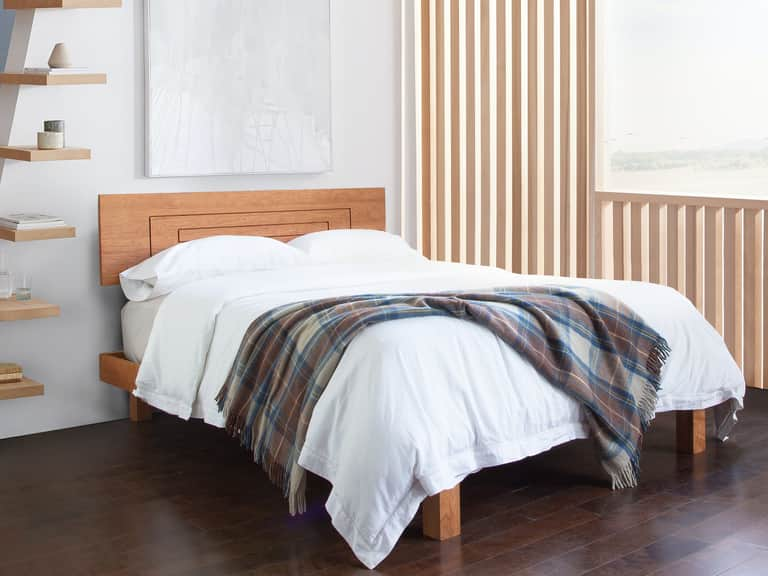
For instance, the Horizon Platform Bed combines a platform construction with clean Arts and Crafts styling. Its listed materials include solid cherry, maple, or walnut, with an oil finish, and it is described as handcrafted to order in Vermont. The Vermont Shaker Moon Bed offers another example of how a platform base can sit beneath a different visual language, pairing a Shaker-style profile with tapered legs and arched headboard and footboard lines. These examples illustrate how the support concept can remain consistent while the furniture’s character changes.
A finish is not only decorative. It can affect how a frame responds to everyday contact and how it should be cleaned or maintained. Follow the maker’s care directions, avoid harsh cleaners unless specifically approved, and protect surfaces from prolonged moisture. For a wood frame, small differences in grain are part of the material’s natural character rather than necessarily a flaw.
Matching the frame to the mattress
A platform frame should be chosen with the mattress in mind, not just its appearance. Start by confirming the mattress size—twin, full, queen, king, or another format—and compare it with the bed’s stated dimensions. Mattress labels describe standard nominal sizes, but actual measurements can vary slightly by manufacturer. The frame’s interior dimensions should allow the mattress to sit securely without being squeezed or left with a distracting gap.
Then consult the mattress maker’s foundation requirements. These may address the type of base, maximum slat spacing, center support, or restrictions for specific mattress constructions. Foam, latex, hybrid, and innerspring mattresses can have different requirements, so general rules should not replace the product’s own instructions. A platform bed is not a guarantee of compatibility simply because it is marketed as a mattress-supporting frame.
Consider the mattress thickness, too. A thick mattress on a low platform can create a comfortable overall height, while a thinner model may sit lower than expected. The combined height affects how easy it is to get in and out of bed, how the headboard relates to pillows, and the proportions of the room. If the bed has a recessed mattress area, check how much of the mattress will remain visible above the rails.
Sheet fit is another small but useful detail. Deep mattresses or mattress-and-topper combinations may require fitted sheets with deeper pockets. The frame itself does not determine sheet size, but the assembled bed’s height and profile can affect how neatly bedding sits. Measure the mattress rather than relying solely on a familiar label.
Room layout, clearance, and everyday use
A platform bed’s clean outline can help a room feel less crowded, but the frame still needs enough space around it to work comfortably. Measure the available floor area, including door swings, closet access, bedside tables, and walking paths. Account for the frame’s outer dimensions, which are usually larger than the mattress itself because of rails, legs, or a headboard.
Think about the height of the bed in relation to the rest of the room. A low frame may emphasize open wall space and make a small bedroom feel visually calm. A taller frame may be easier for some people to use and may provide more under-bed clearance. The amount of clearance also determines whether storage boxes or cleaning tools can fit beneath the frame. If the design includes drawers, confirm that they can open fully without hitting nearby furniture.
Platform frames with a strong, simple outline can work well in many interiors, from contemporary rooms to spaces with more traditional furniture. The key is balance. A substantial wooden headboard may feel imposing in a narrow room, while a very low, spare frame may seem visually small beneath a high ceiling. Bedding, rugs, lighting, and bedside furniture can soften or reinforce the frame’s presence.
A practical checklist before choosing
Whether browsing a showroom or reviewing specifications online, slow down long enough to confirm the details that are easy to overlook. A concise checklist can keep design preferences and practical requirements in view at the same time.
- Support surface: Identify whether the base uses slats, a solid deck, or a mixed system.
- Mattress compatibility: Check the mattress maker’s requirements for platform support and slat spacing.
- Center support: Find out what supports the frame’s center, especially for larger sizes.
- Dimensions: Compare mattress size with the frame’s interior and exterior measurements.
- Materials and finish: Review the construction materials and the care the finish requires.
- Assembly: Consider how the frame is assembled, what tools are needed, and whether parts can be tightened or replaced.
- Room fit: Measure walkways, doors, bedside furniture, and any under-bed storage needs.
- Long-term care: Keep instructions for assembly, cleaning, and periodic hardware checks.
These questions are not meant to turn furniture shopping into a technical exam. They help connect the frame’s visible design to the less visible work it performs. A beautiful bed should also be a sensible fit for the mattress and the room.
Keeping a platform bed in good shape
Once assembled, a platform bed benefits from occasional attention. Follow the manufacturer’s instructions for tightening hardware, and avoid over-tightening fasteners beyond the recommended level. If a frame begins to squeak or shift, check that the parts are aligned and that the slats or panels remain seated. A new noise can be a useful prompt to inspect the structure rather than something to ignore.
When moving a bed, disassemble it as directed instead of dragging it across the floor. Dragging can stress joints, loosen connections, or damage flooring. Keep small hardware together in a labeled container, and retain the assembly guide for future reference. If a component becomes damaged, use an appropriate replacement rather than improvising a repair that could compromise support.
Clean the space beneath and around the frame as part of routine bedroom care. For slatted designs, the open base may make the floor easier to inspect, though the actual clearance depends on the frame. For solid-deck designs, follow the maker’s advice about cleaning and ventilation. A tidy, dry environment helps protect furniture and bedding alike.
A quieter kind of design decision
Platform beds are often praised for their uncluttered appearance, but their appeal is more than a matter of style. The frame establishes how the mattress is held, how weight is carried, how air can move beneath the bed, and how the furniture occupies the room. Slatted construction and solid decks each have a place; the better choice depends on the mattress maker’s specifications, the frame’s quality, and the priorities of the household.
Looking beyond the silhouette reveals the craftsmanship that makes a bed useful: secure joints, sensible support, thoughtfully chosen materials, and proportions that suit the space. Those features may be less immediately dramatic than a headboard or finish, yet they shape how the bed performs day after day. With careful measurements and a few practical checks, it is possible to choose a platform frame that feels considered from the floor up—and looks at home long after a bedroom’s trendiest details have changed.